Short answer: In most older Sheffield terraces the stop tap is in the cellar, low on the front wall where the supply pipe comes in. In newer homes it is usually under the kitchen sink, or near the downstairs toilet or airing cupboard. There is usually an outside stop tap too, at your boundary or in the pavement.
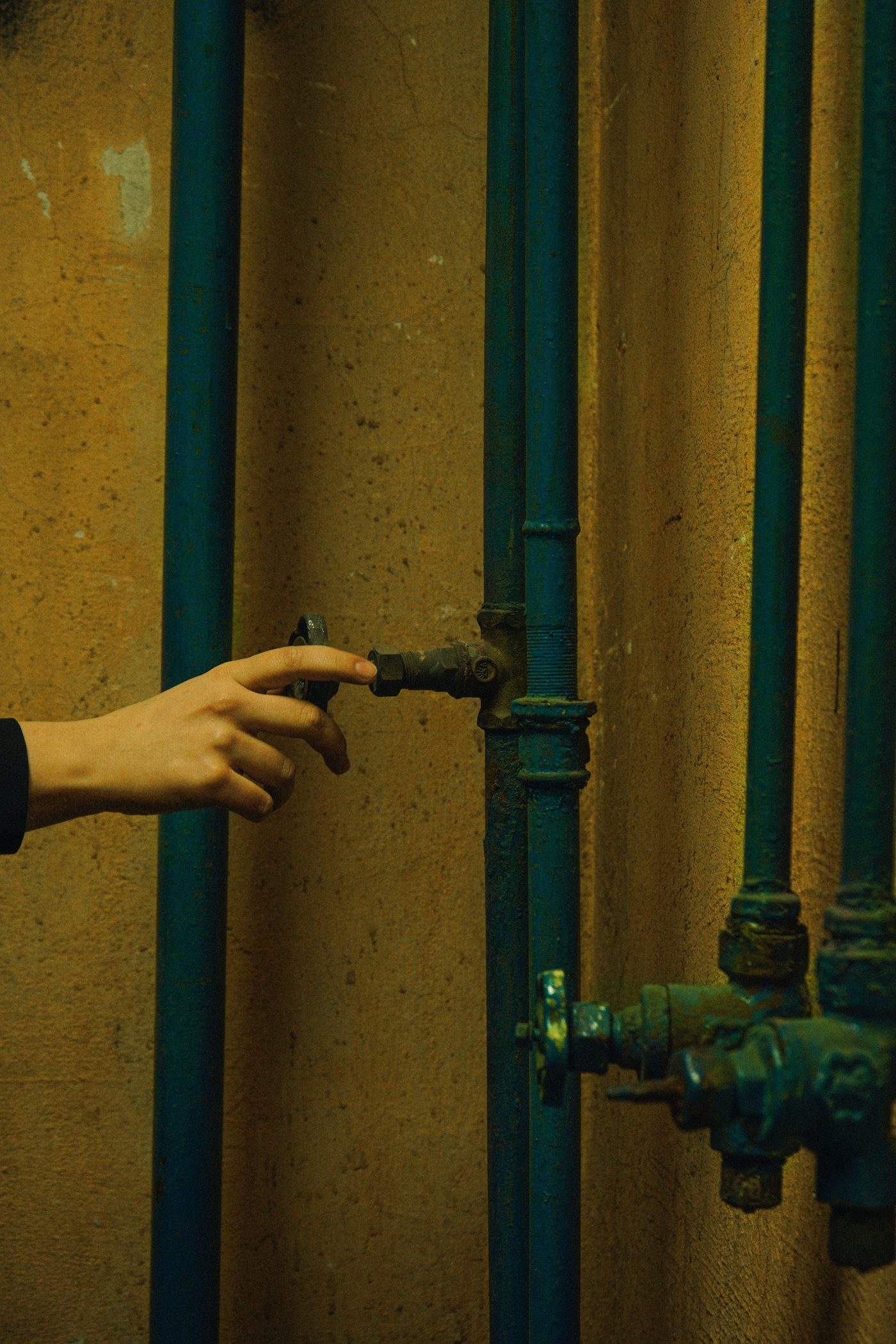
When a pipe bursts, the most useful thing you can know is where your stop tap is. Every minute spent looking for it is water through the ceiling. In Sheffield, the house type usually tells you where to start.
What a stop tap is
The stop tap, sometimes called a stopcock, is a valve on the water supply pipe where it enters your home. Turning it off stops mains water to every tap, toilet, boiler and appliance in the house. It does not drain the water already in the pipes or tanks, but it stops more coming in.
Most homes have two:
- The inside stop tap, which you control and are responsible for.
- The outside stop tap, usually under a small cover at your boundary or in the pavement, which in Yorkshire Water’s area belongs to Yorkshire Water if it is in the road or pavement.
Yorkshire Water’s pipework guidance says stop taps on your property are your responsibility, and stop taps in the road or pavement are theirs.
Where to look in Sheffield homes
| Home type | Where to look first |
|---|---|
| Victorian or Edwardian terrace with a cellar | Cellar, low on the front wall, where the pipe comes in from the street |
| Terrace without a cellar | Under the kitchen sink, or under the stairs |
| Large villa | Cellar front wall, or near where the pipe enters at the front |
| Villa split into flats | Each flat’s kitchen, or the building’s cellar. Several taps side by side, often unlabelled |
| Interwar or post war semi | Under the kitchen sink, or by the front door under the floor |
| Newer build | Under the kitchen sink, near the downstairs toilet or in a utility cupboard |
| Flat in a modern block | In the flat near the kitchen or airing cupboard, sometimes in a riser cupboard in the corridor |
Walkley and the cellar front wall
Walkley’s terraces were built row by row from 1848 by freehold land societies, and almost all have cellars. The supply pipe comes in from the street through the front wall, often as an old lead pipe, and the stop tap sits just inside. If the cellar has been converted or boarded, it may be behind a panel. If your meter is inside, it is usually next to it.
Some Walkley houses share a supply pipe with neighbours. If you turn your stop tap off and water keeps coming, the leak may be on a shared section before your tap, and a neighbour’s stop tap or the outside one may be what you need. Our Walkley area page explains how those shared pipes came about.
How to turn it off
- Turn the handle clockwise until it stops.
- Do not force it. Old stop taps can seize, and the spindle can snap.
- Open a cold tap downstairs to check the water has stopped.
- Open other cold taps to drain the pipes.
- Turn off the boiler and immersion heater if you are draining down.
To turn it back on, turn it anticlockwise slowly. Turning it on fast can cause water hammer and stir up debris.
If it will not turn
A stop tap that has not moved for years often seizes. Try:
- Turning it gently back and forth a little.
- A little penetrating oil on the spindle, left for a few minutes.
If it still will not move, stop. Use the outside stop tap instead, or call a plumber. A seized stop tap is worth replacing before you need it in an emergency.
The outside stop tap
The outside stop tap is usually under a small metal or plastic cover in the pavement, the front path or at your boundary. You need a stop tap key, a long bar with a fitting at the end, to reach and turn it. You can buy one at most hardware shops.
In an emergency you can use it. If it is broken or leaking, report it to Yorkshire Water.
Find it now, not later
The best time to find your stop tap is today:
- Find it.
- Check it turns off and on.
- Label it, especially in a shared house or a flat.
- Tell everyone who lives there where it is.
- Make sure nothing is stored in front of it.
In student houses and flats, a short note on the fridge saying “stop tap: cellar, front wall” saves a lot of damage at 2am.
When to call a plumber
Call a plumber if:
- You cannot find your stop tap.
- It will not turn.
- It drips or leaks from the spindle.
- Turning it off does not stop the water.
- You want an isolating valve fitted so you can turn off parts of the house separately.
If you have water escaping now, our emergency plumber page explains what to do while you wait. Our post on a burst pipe or burst main helps you work out whose pipe it is.
Quick questions
Which way do I turn a stop tap to turn it off?
Clockwise, like most taps. Turn it until it stops, but do not force it.
My stop tap will not turn. What do I do?
Do not force it with a wrench, as old valves can snap. Try the outside stop tap, or call a plumber.
Can I use the stop tap in the pavement?
In an emergency, yes, with a stop tap key. It belongs to Yorkshire Water, so report it if it is broken.
Does my flat have its own stop tap?
It should. In older conversions it is often in the kitchen, a cupboard or the cellar of the building. Label it once you find it.
Last updated 23 October 2026. Written for homes in Sheffield. Rules can change, so check the linked sources for the latest position.