Short answer: Pinhole leaks are tiny holes that form in copper pipe, showing as a fine spray, a green stain or a damp patch. Very soft water, like that in Fulwood, Crookes and Dore, can be more aggressive to metal pipework, but it is rarely the only cause. Damp surroundings, old pipe and leftover flux also play a part.
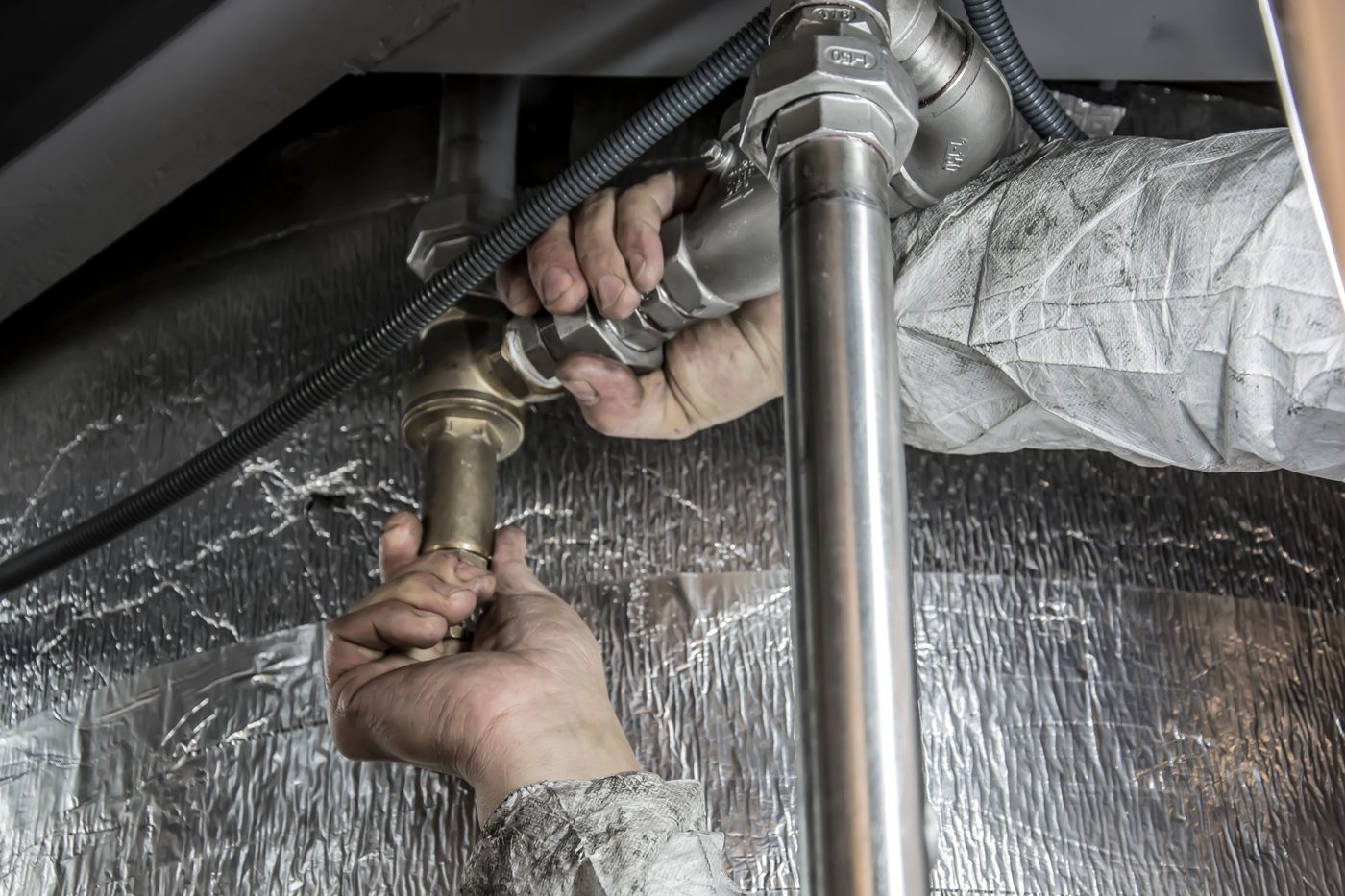
A pinhole leak is exactly what it sounds like: a hole in a copper pipe so small you can barely see it. It might show as a fine spray, a drip that comes and goes, a green or blue crust on the pipe or a damp patch with no obvious cause. In the west of Sheffield, where the water is among the softest in England, people often ask whether the water is to blame.
Sheffield’s soft water
Most of west and south west Sheffield gets its water from Pennine moorland reservoirs, and it is very soft. Yorkshire Water’s 2025 water quality report gives these averages:
| Supply zone | Areas | Average calcium (mg/l) |
|---|---|---|
| Ringinglow | Dore, Totley, Ranmoor, Whirlow, Greystones | 9.3 |
| Fulwood | Fulwood, Crookes, Walkley, Sandygate | 9.5 |
| Sharrow | Sharrow, Heeley, Carter Knowle, plus the Nether Edge postcodes we checked | 15.4 |
| Neepsend | Crookesmoor, Broomhall, Netherthorpe | 16.8 |
The same report shows the water meets UK and European limits for every measured substance. Yorkshire Water also says it does not soften water at any of its treatment works, so what comes out of your tap is close to what comes off the moors after treatment.
What the Drinking Water Inspectorate says
The Drinking Water Inspectorate cites World Health Organisation guidance that soft water with a hardness of 100 mg/l or less, measured as calcium carbonate, “will be more corrosive to pipework”. Converting Yorkshire Water’s calcium figures roughly, west Sheffield’s water is well under that.
Hard water tends to lay down a thin layer of scale inside pipes, which can protect the metal. Very soft water does not, so the copper is in more direct contact with the water. Water companies can treat water to reduce its effect on pipes, and most copper pipes in soft water areas still last for decades without trouble.
So soft water can be a factor, but it is not the whole story. Many homes in Fulwood have original copper that has never leaked.
Other causes of pinhole leaks
| Cause | How it causes pinholes |
|---|---|
| Damp or wet surroundings | Corrosion from the outside, common in cellars and under solid floors |
| Contact with cement, plaster or some soils | Chemicals attack the outside of the pipe |
| Flux left inside joints | Excess soldering flux can eat through from the inside |
| High water velocity | Fast flow wears the inside of bends and fittings, especially on hot water pipes |
| Debris in the pipe | Particles left after installation can create pitting |
| Age | Thin walled older copper has less margin |
| Electrical faults | Rarely, stray electrical current through the pipe |
In Sheffield, the outside of the pipe is often the problem. Copper running through a damp cellar in Crookes or Walkley, or buried in the concrete floor of a post war semi, corrodes from the outside in.
How to spot one
- A fine spray or mist from a pipe.
- A drip that only appears when water is running.
- Green or blue staining on the pipe, a sign of copper corrosion.
- A damp patch on a ceiling, wall or floor that keeps returning.
- A water meter that moves with every tap off.
- On a heating pipe, a boiler that keeps losing pressure.
If you are on a meter, the meter test is the quickest check. Turn off every tap, read the meter, wait an hour without using water and read it again. Our post on who fixes a water leak explains the test and the boundary rules.
Repair options
- A temporary clamp. A repair clamp stops the leak for now. It is a holding fix.
- Cut out and replace the section. The usual repair. The damaged length is cut out and new pipe joined in.
- Replace the run. If the pipe has several pinholes or is thin and pitted along its length, replacing the whole run is the lasting fix.
- Reroute. If the pipe runs through a damp cellar or is buried in a floor, moving it to a dry, accessible route stops the problem coming back.
Plastic pipe does not corrode, so it is a good choice for runs through damp spaces. Copper is still preferred near the boiler, where pipes are on show and where heat could affect plastic.
Fulwood homes
Fulwood has a lot of larger interwar and post war homes, many with original copper pipe now several decades old. Long runs to second and third bathrooms, pipes through garages and buried heating pipes all add up to more places for corrosion. Our Fulwood area page covers other jobs in those homes.
When to call
Call a plumber if you see any sign of a pinhole, even if it is only a damp spot. Small leaks become bigger and can damage ceilings and floors. Our leak detection page explains how we find leaks with the least disruption.
Tell us where the damp is, what the pipe looks like and your postcode, and we will tell you what we suspect.
Quick questions
Is Sheffield water corrosive?
The water meets drinking water standards. The Drinking Water Inspectorate notes that soft water of 100 mg/l or less as calcium carbonate can be more corrosive to pipework.
Can a pinhole leak be patched?
A short term clamp can stop it, but the usual fix is cutting out the section and fitting new pipe.
If I have one pinhole, will I get more?
Possibly, if the cause affects the whole run. A plumber can check the condition of the rest of the pipe.
Should I replace copper with plastic?
Sometimes. Plastic does not corrode, but copper is still preferred near boilers and where pipes are on show.
Last updated 23 October 2026. Written for homes in Sheffield. Rules can change, so check the linked sources for the latest position.