Short answer: To find a leak under the kitchen sink, dry everything, then test one thing at a time. Run the tap with the plug out to test the waste. Fill and empty the sink to test the overflow. Leave the taps off to test the supply. Water with taps off means a supply leak, often a joint or tap tail.
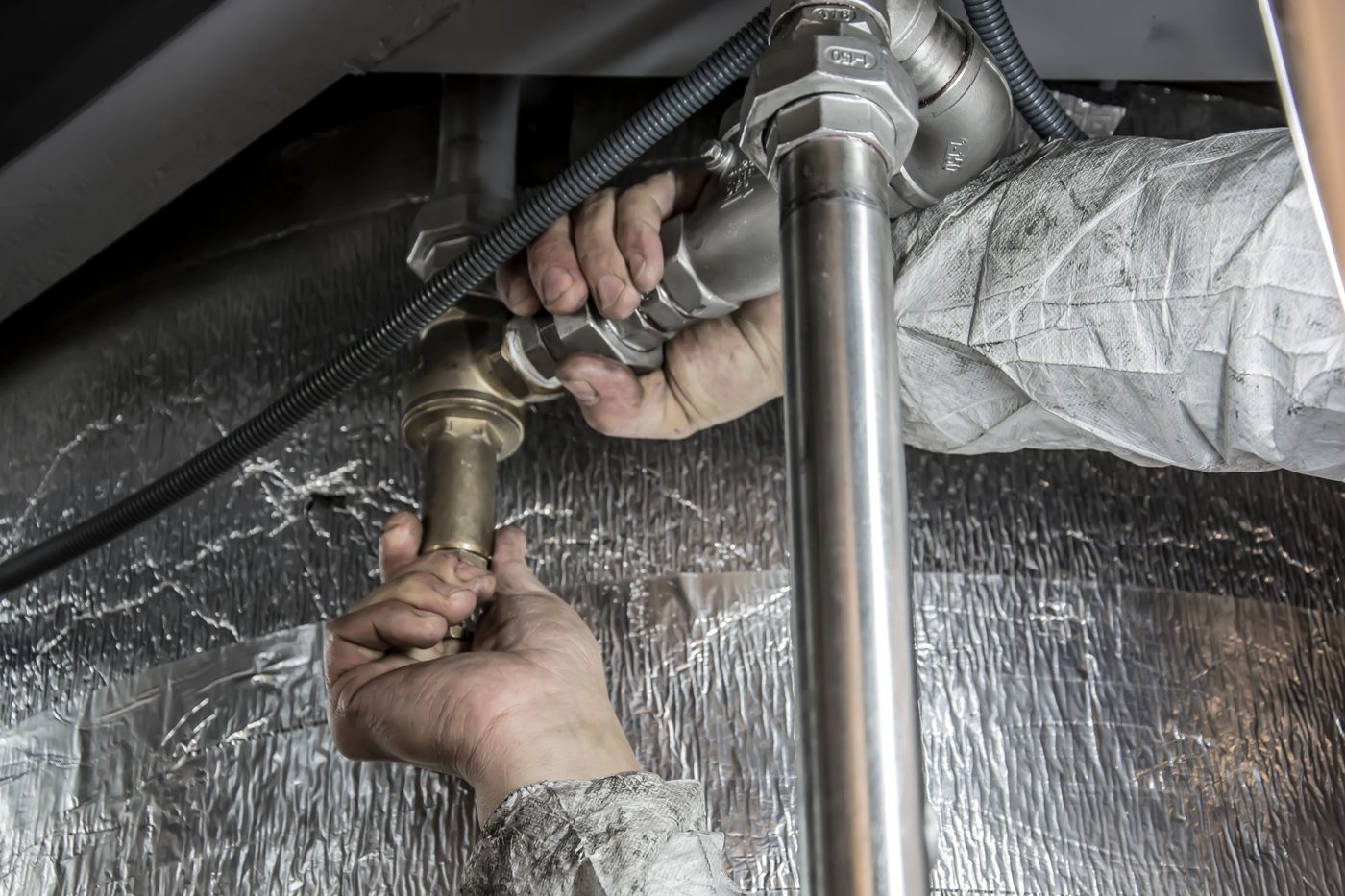
Water under the kitchen sink is one of the most common leaks in any home. Because the cupboard is full of cleaning products and the pipes are hidden at the back, it often goes unnoticed until the base board swells or a smell appears. Finding it is mostly a matter of testing one thing at a time.
Step 1: empty and dry
Take everything out of the cupboard. Dry all the pipes, the base and the back of the sink with kitchen roll. Put a dry sheet of kitchen roll on the base, so any new drip shows clearly.
Step 2: test the supply pipes
Leave the taps off. Wait twenty minutes. Look and feel along the hot and cold pipes, the isolating valves and the flexible tap tails that run up to the tap.
If you find water with the taps off, it is a supply leak. These are under mains pressure, so they matter more. Common culprits:
- Compression joints, where copper pipe joins a valve or fitting with a brass nut and ring called an olive. They can loosen over time.
- Flexible tap tails, braided hoses from the valves to the tap. They wear, and the rubber inside can fail.
- Isolating valves, which can weep from the spindle.
- Washing machine and dishwasher valves and hoses, often in the same cupboard.
Step 3: test the waste
Run the tap with the plug out for a minute. Watch the waste pipe, the trap, and where the waste joins the wall or the drain.
If water appears only when the tap runs, it is a waste leak. Common causes:
- A loose plastic nut on the trap or waste pipe.
- A cracked trap.
- A worn seal where the waste fitting goes through the sink.
- A washing machine or dishwasher waste hose not pushed firmly onto its connection.
Step 4: test the full sink
Put the plug in and fill the sink, then pull the plug. If water appears now but not before, the problem is the overflow connection, the plug seal or the waste fitting under pressure from a full sink.
Simple fixes you can try
| Leak | Try this |
|---|---|
| Plastic waste nut | Hand tighten, or reseat the seal |
| Compression joint weeping | A gentle quarter turn with a spanner, holding the fitting still |
| Appliance hose loose | Push it on firmly, check the clip |
| Overflow connection | Tighten or replace the seal |
Do not over tighten compression joints. It can crack the olive and make the leak worse. If a quarter turn does not stop it, the olive may need replacing.
When it is not the sink
Sometimes the water under the sink has come from somewhere else:
- A dishwasher or washing machine next to the sink, leaking from its own hoses.
- The tap itself, leaking from its base and running down the tap tails.
- A pipe in the wall behind the units, especially if the house has old pipework.
- Condensation on a cold pipe in summer, which can drip enough to wet a cupboard.
Older Sheffield kitchens
In older homes, including the Victorian terraces of Hillsborough, the kitchen is often at the back, with pipes coming up through the floor from the cellar. A leak under the sink can track down the pipe and show up in the cellar instead. If you have damp on the cellar ceiling under the kitchen, check the sink first.
The water in Hillsborough is moderately soft, about 29.8 mg/l calcium in the Ewden zone in Yorkshire Water’s 2025 report. Scale is rarely the cause of leaks there. Age and wear of joints usually are. Further west, in the very soft water areas, old copper can pinhole over many years. Our post on pinhole leaks in copper pipes covers that, and our Hillsborough area page explains more about those homes.
While you wait for a plumber
- Turn off the isolating valves under the sink, or the stop tap if there are none.
- Put a bowl or tray under the leak.
- Do not run the washing machine or dishwasher if their supply is affected.
- If the base board has got wet, leave the cupboard open to dry it out.
When to call
Call a plumber if:
- The leak is on a supply pipe and tightening does not stop it.
- A tap tail or valve needs replacing.
- The leak is in the wall or under the floor.
- You cannot find the source.
- The base or nearby units are damaged.
Our leak detection page explains how we find leaks that are not obvious. If the water has also got into the cellar, our post on water in your cellar may help.
Send us a photo of the pipes under the sink and tell us when the water appears, and we will tell you what we think is leaking.
Quick questions
Why is the cupboard under my sink wet?
Most often a loose waste joint, a worn tap tail, a dripping compression joint or a washing machine or dishwasher hose.
Can I tighten a compression joint myself?
A gentle quarter turn often stops a weep. Over tightening can crack the olive and make it worse.
My sink only leaks when it is full. Why?
Likely the plug seal, the overflow connection or the waste fitting where it goes through the sink.
Should I turn off the water?
If the leak is on the supply pipes, turn off the isolating valves under the sink or the stop tap.
Last updated 23 October 2026. Written for homes in Sheffield. Rules can change, so check the linked sources for the latest position.