Short answer: A boiler that keeps losing pressure is losing water from the heating system. The usual causes are a leak on a radiator, valve or hidden pipe, a pressure relief valve letting water out, or a failed expansion vessel. Topping up helps for now, but frequent topping up means the cause needs finding.
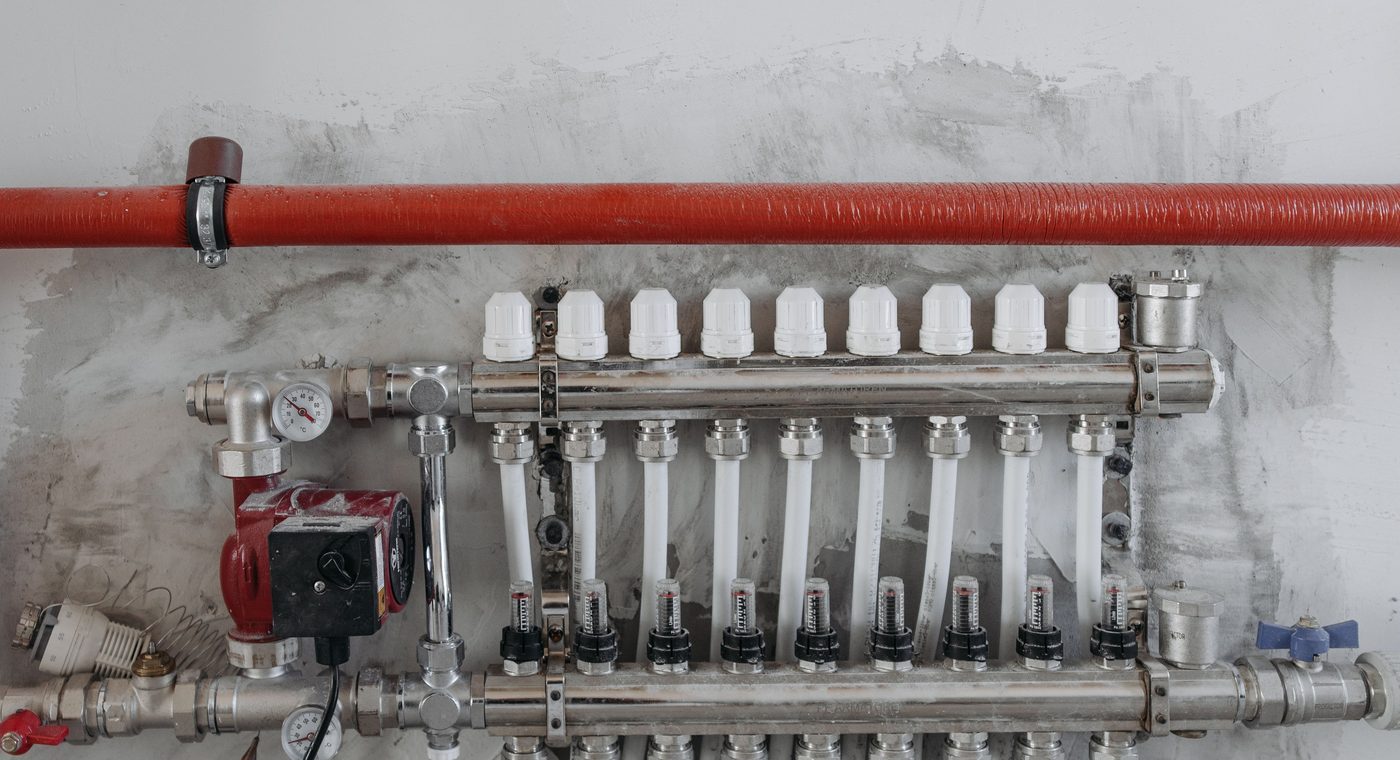
Most modern boilers in Sheffield homes run on a sealed heating system. Once it is filled and pressurised, the water stays in. If the pressure gauge keeps dropping, water is getting out somewhere. Topping it up gets the heating back on, but it does not fix anything.
What normal looks like
Look at the pressure gauge on the front of the boiler, or on the pipes below it. On most sealed systems:
- Cold: around 1 to 1.5 bar.
- Hot: a little higher, often up to around 2 bar.
- Below 1 bar: many boilers will show a fault or lock out.
- Near 3 bar: the pressure relief valve will open and let water out.
Your manual gives the exact figures for your boiler.
How to top up
Most combi boilers have a filling loop: a short braided hose or a built in key with one or two valves. Your manual explains the steps, but in general:
- Turn the heating off and let the system cool.
- Open the filling loop valves slowly.
- Watch the gauge and close the valves when it reaches about 1 to 1.5 bar.
- Make sure both valves are fully closed.
- Reset the boiler if needed.
If you top up and it drops again within days or weeks, something is wrong.
Cause 1: a leak on the heating system
Water has to go somewhere. Look for:
- Drips or green or white crust on radiator valves.
- Damp patches on ceilings under radiators or pipes.
- Rust or staining under radiators.
- Damp patches on floors, or warm patches on a solid floor.
- Water dripping inside the boiler casing.
Hidden leaks under solid floors
This is a common one in Handsworth and other parts of east Sheffield. Many post war semis there have concrete ground floors with heating pipes laid in the screed. Over the decades, those pipes can corrode or crack. The leak is invisible. All you see is the pressure falling.
Thermal imaging while the heating runs shows where the warm water is escaping, so only a small area of floor needs opening. Sometimes the best fix is to abandon the old buried pipe and run a new one along the wall. Our leak detection page explains how this works, and our Handsworth area page covers other common jobs in those homes.
Cause 2: the pressure relief valve
Every sealed system has a pressure relief valve, which opens if the pressure gets too high. It usually connects to a copper pipe that goes through the wall and ends outside, often pointing down near the ground.
If that pipe is dripping, or there are wet marks or limescale on the wall below it, the valve is letting water out. Either the pressure is going too high, often because of the expansion vessel, or the valve itself is worn and not sealing.
In harder water areas like Handsworth and Rotherham, scale can stop a valve sealing properly. Yorkshire Water’s 2025 report puts the Aughton and Woodhouse zone, which covers Handsworth, at 77 mg/l calcium, which it classes as moderately hard.
Cause 3: the expansion vessel
Water expands when it heats. The expansion vessel, a small tank inside or next to the boiler, has an air cushion that absorbs that extra volume. Over time the air leaks out. Without it, the pressure shoots up when the heating comes on, the relief valve opens to protect the system, and when it cools the pressure has dropped.
The telltale sign is a gauge that swings a lot between cold and hot: normal when cold, very high when hot, then low again. A Gas Safe registered engineer can recharge the vessel or replace it.
Cause 4: recent work
If you have just bled radiators, had a radiator changed or had any work on the heating, the pressure will drop as air is released. Top it up once. If it keeps dropping after that, look for a leak at the work that was done.
Quick diagnosis table
| What you see | Likely cause |
|---|---|
| Steady slow drop, no visible water | Hidden leak, often under a floor |
| Drop plus drips at radiators or valves | Visible leak at a valve or radiator |
| Pipe outside dripping or wet wall below it | Pressure relief valve opening |
| Pressure very high when hot, low when cold | Failed expansion vessel |
| Drop after bleeding radiators | Normal, top up once |
What not to do
- Do not keep topping up for months. Fresh water brings in oxygen, which speeds up corrosion and sludge.
- Do not take the boiler casing off. Any work inside a gas boiler must be done by a Gas Safe registered engineer. Ask to see their ID card.
- Do not use a leak sealer as a first step. It can help with tiny weeps but can also block boiler parts. Find the leak first.
When to call
Call an engineer if the pressure drops more than once or twice a year, the relief pipe is dripping, the gauge swings a lot, or you can see water inside the boiler. Our boiler repair page explains how a repair visit works. If your radiators are also cold in places, our post on a radiator not heating up may help.
Send us the boiler make and model, how often you are topping up and what you have noticed, and we will tell you what we think is most likely.
Quick questions
What pressure should my boiler be at?
Most sealed systems sit between about 1 and 1.5 bar when cold, rising a little when hot. Check your boiler manual for its own figure.
Is it safe to top up my boiler pressure?
Yes, using the filling loop as the manual describes. Close it fully afterwards.
Why does my pressure go up high and then drop?
That points to a failed expansion vessel. The pressure rises as water heats, the relief valve opens, and the pressure then falls when it cools.
Who can fix the boiler itself?
Work inside a gas boiler, including the expansion vessel or relief valve, must be done by a Gas Safe registered engineer.
Last updated 23 October 2026. Written for homes in Sheffield. Rules can change, so check the linked sources for the latest position.